Event management
Sep 22, 2026

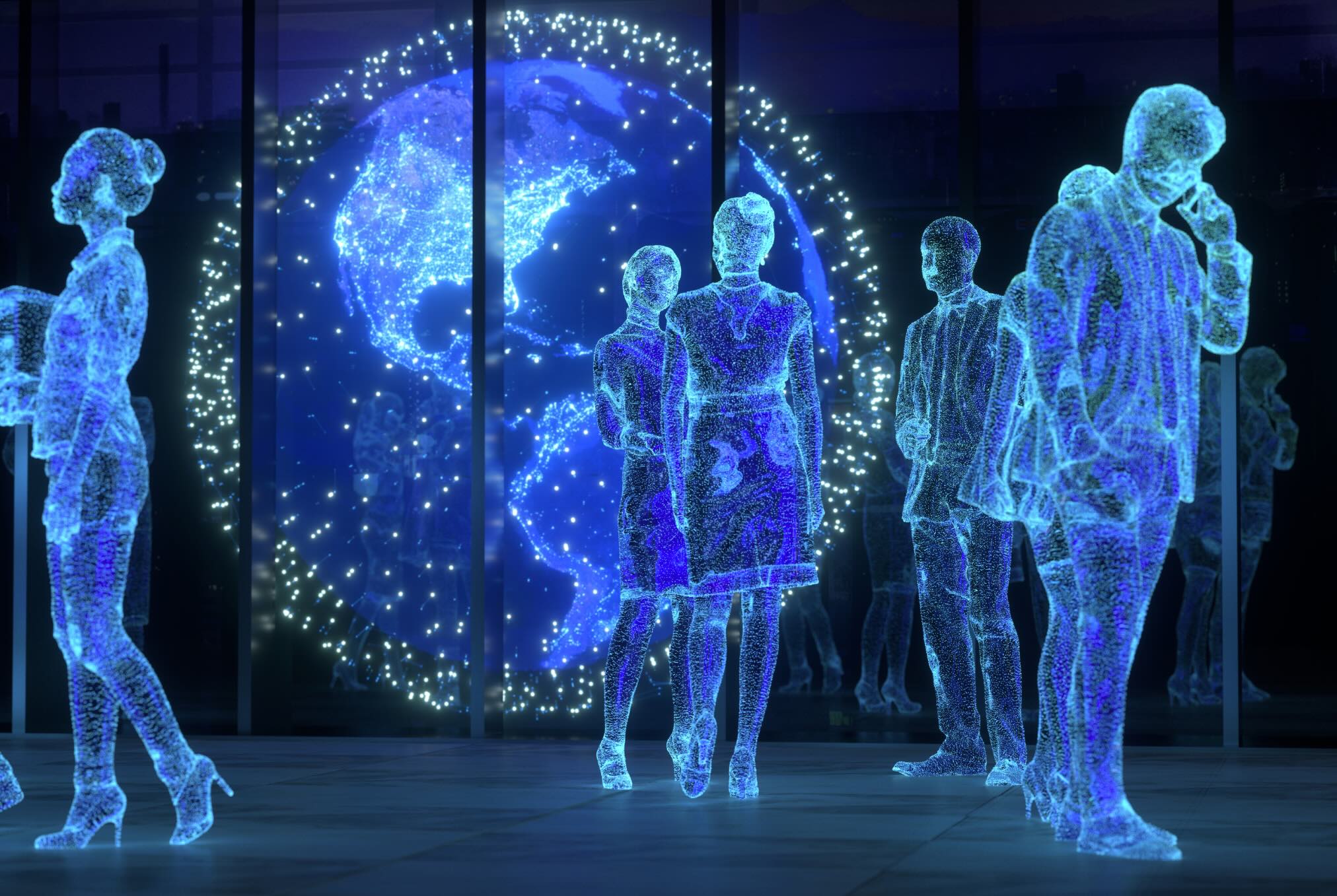
My CTO Gavin and I wrote a prediction in January 2020 about the impact AI was going to have on meetings and events. The industry didn't see the Gen AI train coming, nor could it have predicted the rapid digital transformation it was about to unleash. Now it's here – even we couldn't have fathomed the speed and scale of it.
Sam Altman, CEO of OpenAI, says we're living through The Transition: the shift from a world where intelligence is scarce and human-constrained to one where it is essentially unlimited and available on demand. That is a different thing from AI getting better. It changes how value is created, how work gets done, and what human expertise is actually for. German economist and engineer Klaus Schwab places it in a historical sequence starting with the agricultural revolution, then the industrial, followed by the electrical through to the computing and internet age, and now this. But while each prior revolution took generations to reshape society, this one is being measured in months.
The signal here isn't only that AI is powerful. It's how fast it has been adopted, and what that pace demands of every business, including ours. ChatGPT reached 100 million users in two months. The internet took seven years to hit that number. A task that used to require several steps, forming a query, searching, scanning, navigating, extracting and acting, now only takes one: state your intent and get a complete answer, tailored to you. Every workflow built around the old sequence will be replaced or augmented by AI. The commercial disruption backs this up. Cursor AI, a generative coding platform, went from zero to $2 billion in annualised revenue in under three years, the fastest SaaS growth ever recorded. Harvey, AI for legal services, grew revenue 558% in a single year.
That pace is unsettling even for the people building the technology. In recent weeks, Sam Altman and Dario Amodei, CEO of Anthropic, have both warned publicly that the race to AGI (Artificial General Intelligence), and beyond it to ASI (Artificial Superintelligence), is moving faster than anyone predicted, and that, without decisive government guardrails, the consequences for humanity could be catastrophic. The list of risks they and their peers point to is sobering: biological, cyber, and informational misuse on a scale that states are not equipped to counter; economic displacement compressed into a handful of years rather than a generation; a dangerous concentration of power in whoever controls the most capable models; and, at the far end, the loss of meaningful human oversight over systems more capable than us. When the CEOs building the frontier are the ones calling for the brakes, that is a signal every leader and every government should be listening to.
This unsettling pace also means that it’s more important than ever to keep up. In our industry, picking a legacy player to manage your meetings and events programme in the AI era is the surest way to get left behind. But my 2020 article made a point that holds just as true in 2026: AI on its own will never be enough to deliver a successful meetings and events programme. It needs AI working alongside human creativity, expertise and judgement, the IQ plus the EQ. The question I left readers with was not whether AI will change how your M&E programme works but whether you'll be the one driving that change or reacting to it.


Fast forward five years, and in January 2025 we began working on a new framework around what it means to be AI Smart as opposed to AI First. Two things pushed us there.
The first was the Salesforce advert at the 2025 Super Bowl, which saw Matthew McConaughey dining in a downpour, because his AI agent didn’t have enough context to properly book. It captured how throwing AI at a problem without purpose or meaning is worse than insufficient; it's absurd. It was obvious to us that applying AI First thinking to meetings and events, without the domain intelligence to deploy it meaningfully, wasn't going to add value for our customers. Speed without expertise just delivers faster mistakes.
The second was that, against this backdrop of transformation, the meetings and events industry had a big problem hiding in plain sight. 91% of travel managers are now also responsible for M&E. An entire category of spend has been added to their remit, with no additional resource, no specialist technology and no reliable data to work from. The challenges this creates are consistent and painful. For small and medium events, which represent the vast majority of M&E activity, the major legacy players who hold dominant market share have deployed almost no meaningful technology. They still operate through predominantly human-led, manual processes. Shadow spend is everywhere, and when a budget is scattered across dozens of unconnected tools, direct venue relationships and offline negotiations, it’s invisible. It’s important to note that venue supply in meetings and events is fundamentally different from the supply travel managers are used to. Travel sits with 50 to 100 large airline and hotel groups, manageable and data-rich; M&E venue supply is tens of thousands of independently owned bars, restaurants, private dining spaces and experience providers, disaggregated and impossible to negotiate with at scale without the right intelligence layer. On top of all this, corporate buyers are no longer willing to accept a simple hotel conference room. They want distinctive spaces that reflect their brand and give people something worth remembering.
The old model has quietly broken. Sourcing is still manual and approvals still sequential in a world where speed is now competitive currency. There is no intelligence layer sitting behind the process, so nothing learns from the last decision. Spend is fragmented, reporting is retrospective, and procurement is blind in real time. Growth requires proportionally more headcount because there is no flywheel and every event starts from scratch. And when employees source venues and sign contracts independently, each interaction becomes a compliance and legal exposure, with sensitive event and attendee data passing through uncontrolled channels and no audit trail. The model is simply too slow, too expensive and too human-dependent for the AI era.
To meet this challenge, we framed our strategy around what it would take to be a truly AI Smart platform: one that combines AI infrastructure with ten years of domain knowledge and proprietary data, so that we deploy AI solutions intelligently instead of indiscriminately. At the core of this is what we call our system of intelligence.
Here's what most organisations misunderstand about AI competitive advantage: the model is not the differentiator. GPT, Claude, Gemini are utilities, like electricity. Every competitor has access to the same power source. What cannot be replicated is the data you plug into it. Netflix's recommendation engine isn't powerful because of its model; every streamer uses similar models. It is powerful because of decades of irreplaceable behavioural data. HeadBox has spent over a decade building exactly this kind of asset: 100,000+ venues, 50,000+ events, tens of thousands of enquiries, and a decade of corporate buyer behaviour across six continents, all structured and queryable by AI.
This is the shift from system of record to system of intelligence. The system of record for meetings and events captures briefs, bookings and invoices. It's useful, but it forgets. Our system of intelligence remembers, because supply and demand live together on the same platform, and every brief, sourcing decision and completed event adds to a memory that compounds. Platforms that keep supply and demand apart have no memory. With our latest release of HeadBox for Business, we have a platform that never forgets.
That system of intelligence rests on three core data assets: the company and its meetings and events programme, so we understand each organisation at a structural level and what matters to them; the booker and their key data points, built from years of booking history, knowledge and preferences; and the full picture of venues, hotels, suppliers and accommodation. It is the interaction of supply and demand across all three that creates uniquely rich, compounding data, a flywheel that drives smarter outcomes for every next brief and every next booking.
Our system of intelligence for meetings and events only matters if it enables the right calibration across three pillars: how much to dial the human role up or down; how far to push AI automation, from assistive, to copilot, to fully agentic; and how deliberately we manage risk as automation increases. HeadBox for Business is built around getting this synthesis right.
Why does this matter so much to our customers? Because there's a tension sitting at the heart of the AI era that cuts against the instinct to automate everything. As AI becomes ubiquitous, trust is becoming the scarcest commodity of all. Deepfakes have enabled multi-million-dollar wire fraud through faked video calls. Political leaders now dismiss real evidence simply by claiming it's synthetic, what researchers call the Liar's Dividend. The result is a genuine cultural counter-reaction: people spending more time in face-to-face interaction, brands discovering "authenticity fatigue" as audiences reject content that feels too smooth and too perfect.

In a world where you cannot fully trust a video call, a voice, or a written communication, a room full of real people is the one thing that cannot be generated. A shared meal, a conference, a team offsite become epistemically safe spaces in a world of synthetic uncertainty. For meetings and events, this is a tailwind of historic proportions. And precisely because it is, more automation demands more deliberate control, not less. The more of the workflow AI handles, the more disciplined we have to be about where human judgement, governance and accountability sit.
1. Service as software, rather than service replaced by software.
In our HeadBox for Business platform, we are scaling our human service so it is faster, smarter, and higher quality. AI is embedded across the whole workflow, from qualify, source and propose through to negotiate, contract and close, while human expertise stays in charge of the judgement calls. We have also built the agentic layer, an agent that reads the brief, invites venues, chases responses, shapes proposals and flags watchouts, with the team supervising every step. Alongside it, we're running Agent Shadow, an agent that makes its own call on every decision the team faces, learns from what the team actually chooses, and earns the right to act alone one decision at a time. This is not about removing the concierge. It's about making the concierge faster and freer to focus on the parts of the job that need a human.
2. Scaling supply: launching a new city in hours rather than months.
An agent discovers venues in a new market, scores them against our ideal customer profile, researches the ones worth pursuing in real depth, writes the listing itself, and manages the venue through claiming. A human is able to step in at any point, whether that means choosing tasteful photos or simply approving listings before they go live. A further ten US cities are already staged and going live now, and we are well on our way to adding another 100 cities to our existing global footprint in the next 12 months. This is what an AI Smart supply engine looks like in practice: a compounding, self-improving pipeline that a human still controls, in place of a team manually onboarding venues one at a time.
3. Personalisation and curation: elevating the role of the event planner.
Booker personalities are built from years of M&E team notes and real booking behaviour, summarising likes, dislikes and patterns for whoever picks up the next brief. Bookers can ask AI anything about a venue and get answers grounded in deep, personalised research, with their preferences and collections carrying across every future brief. The effect, for our mandated corporate bookers, is that the administrative and operational burden lifts. They get to spend their time on what they're actually good at: relationship building, creativity and curation, instead of chasing venues and reconciling spreadsheets.
Put these three together and you can see what an AI Smart platform actually looks like. It is not AI bolted onto an old process, and it is not a bet that AI can replace the people who make events work. It is a decade of proprietary domain knowledge, compounding with every transaction, deployed through AI infrastructure that scales human service, scales supply, and puts the booker in a more valuable role. Human judgement is dialled up precisely where creativity, risk and trust require it. That combination is what a legacy incumbent cannot retrofit and what an AI-native entrant cannot buy.
It's also the only version of this future worth building towards: one where AI does the heavy lifting on speed, scale and the intelligence layer, from sourcing and compliance to data, procurement and reporting, while humans bring the creativity, relationship building and judgement to design an experience that moves people. The role shifts from administrator to lead architect.
This is how the AI era itself has to be built, with humans in the lead and AI in tandem. Humans belong not just in the concierge team but in the boardroom, and, above all, at the level of the governments and institutions that will decide how this technology is allowed to reshape our economies, our democracies and our security. If we cannot get that calibration right on the smaller stage, we have little chance of getting it right on the biggest one.