HeadBox news
Oct 7, 2026

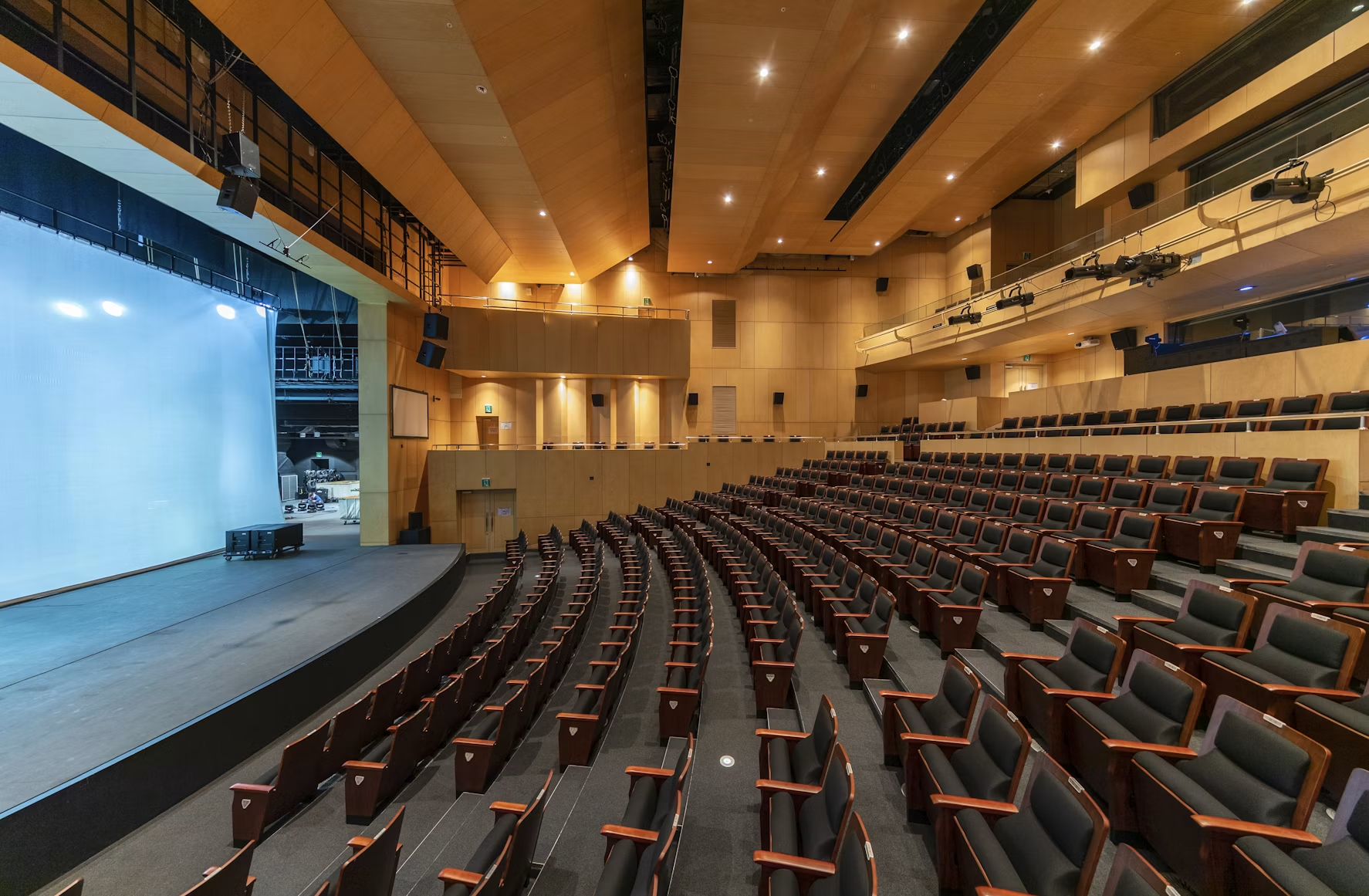
For global marketing directors and event planners, pulling off a multi-city product launch often feels like a logistical marathon. One week you're on a flight to London. Next, you're landing in New York to check out yet another potential venue. A live, in-person launch has an impact nothing else quite matches, but the traditional way of sourcing and inspecting venues across different countries is slow, manual, and genuinely expensive.
Between rising hotel rates, climbing food and beverage costs, and corporate sustainability targets that aren't going away, planning teams are under real pressure to work smarter. Here's why traditional remote sourcing tends to break down, and how a digital-first approach fixes most of it.
For a long time, coordinating a global launch meant near-constant travel. Planners felt they had to be physically in the room to understand a venue's layout, scale, and flow, and there wasn't really an alternative.
Two things make that model increasingly hard to justify. Business travel is the single largest contributor to an event's carbon footprint, often accounting for over 60% of total emissions. At the same time, hotel rates in key hubs like New York and London keep climbing, which means a handful of physical site visits can eat into a launch budget before the event has even happened.
Moving away from that dependency doesn't mean giving up. Immersive digital touring tools let planners review spaces remotely and asynchronously, without losing the detail that used to require being on-site.
Booking a venue from thousands of miles away comes with a fairly obvious fear: not really knowing what you're getting. If a listing only offers flat, outdated photography, that uncertainty shows up fast.
Static images rarely capture how a product will actually look under specific lighting, or how guests will move through a space once it's full of people. It's also hard to visualize a transition, say from a reception lounge into a high-production presentation stage, when all you have is a handful of disconnected photos. Without that context, most planners hesitate to sign.
HeadBox 3D virtual walkthroughs solve this in a more direct way. Global teams can inspect a space whenever it suits them, test different layout options, and get remote stakeholders aligned without waiting for everyone's calendars to match up.
Managing separate contracts, local AV suppliers, and catering teams across different cities and time zones creates its own kind of chaos. When coordination is spread across a handful of disconnected tools, communication tends to break down somewhere along the way, and a minor tech glitch or staging delay on launch day can do real damage to buyer or investor confidence.
The fix most brands are landing on is centralization: working with a single platform that acts as one point of contract and payment, which simplifies international compliance considerably.
If you're tired of booking flights just to peer into conference rooms, there's a better way to do this. HeadBox is built to simplify both the discovery and the booking side of multi-city launches, end to end.
Instead of scrolling through endless static listings, HeadBox uses AI to match complex launch briefs directly with pre-qualified, suitable spaces. That cuts out hours of manual research and most of the back-and-forth messaging that usually comes with it.
HeadBox 3D virtual tours let stakeholders explore a venue in high resolution and confirm it's the right fit without ever leaving their desks, which removes most of the digital doubt described above.
HeadBox partners with venue operators like Convene to keep quality consistent across major markets. Convene runs premium, high-production spaces in London and New York, with fully customizable "white box" environments, built-in LED media walls, and on-site tech teams already in place.
HeadBox handles the legal and financial admin directly. Acting as the single point of payment and single point of contract removes the risk and hassle of managing separate venue agreements in different countries.
How do virtual venue tours reduce the cost of a multi-city product launch?
They cut out the need to fly planning teams to every city for physical site inspections. Replacing that travel with HeadBox 3D tours saves on flights, hotels, and per diems, and that budget can go toward launch production and catering instead.
How does HeadBox keep brand and spatial consistency across international locations?
Mostly through partnerships with premium venue providers like Convene, whose "white box" spaces come with standardized, high-production AV built in across major hubs like London and New York. That consistency is what makes a launch feel identical no matter which city it's in.
Can HeadBox 3D tours fully replace physical site visits?
Not entirely. Some planners still want a final in-person walkthrough before signing off. What the tours do is cut out most of the early-stage travel, letting teams shortlist, compare, and align remotely, so a physical visit becomes a single final check rather than three or four separate trips.
How does this help companies hit Scope 3 sustainability targets?
Travel is typically the biggest single contributor to event emissions. Swapping multiple physical site inspections for remote HeadBox 3D walkthroughs cuts that impact dramatically, from an average of 7.12 kg CO2e per in-person visit down to roughly 0.026 kg CO2e for a virtual one.
What's the administrative benefit of using HeadBox for global launches?
HeadBox acts as the single point of contract and single point of payment. That means all your international venue agreements run through one stream, instead of negotiating separate contracts, currencies, and terms with every venue in every region.
The brands pulling ahead right now are the ones treating speed, efficiency, and sustainability as connected goals rather than separate boxes to tick. Manual venue sourcing, physical site inspections, and fragmented contracts tend to produce the same result: budget leaks and slower timelines.
With the HeadBox One Platform and HeadBox 3D tools, global teams can get aligned quickly, cut out administrative friction, and run multi-city launches almost entirely from their desks.