
London's quiet corners: Arnold Circus
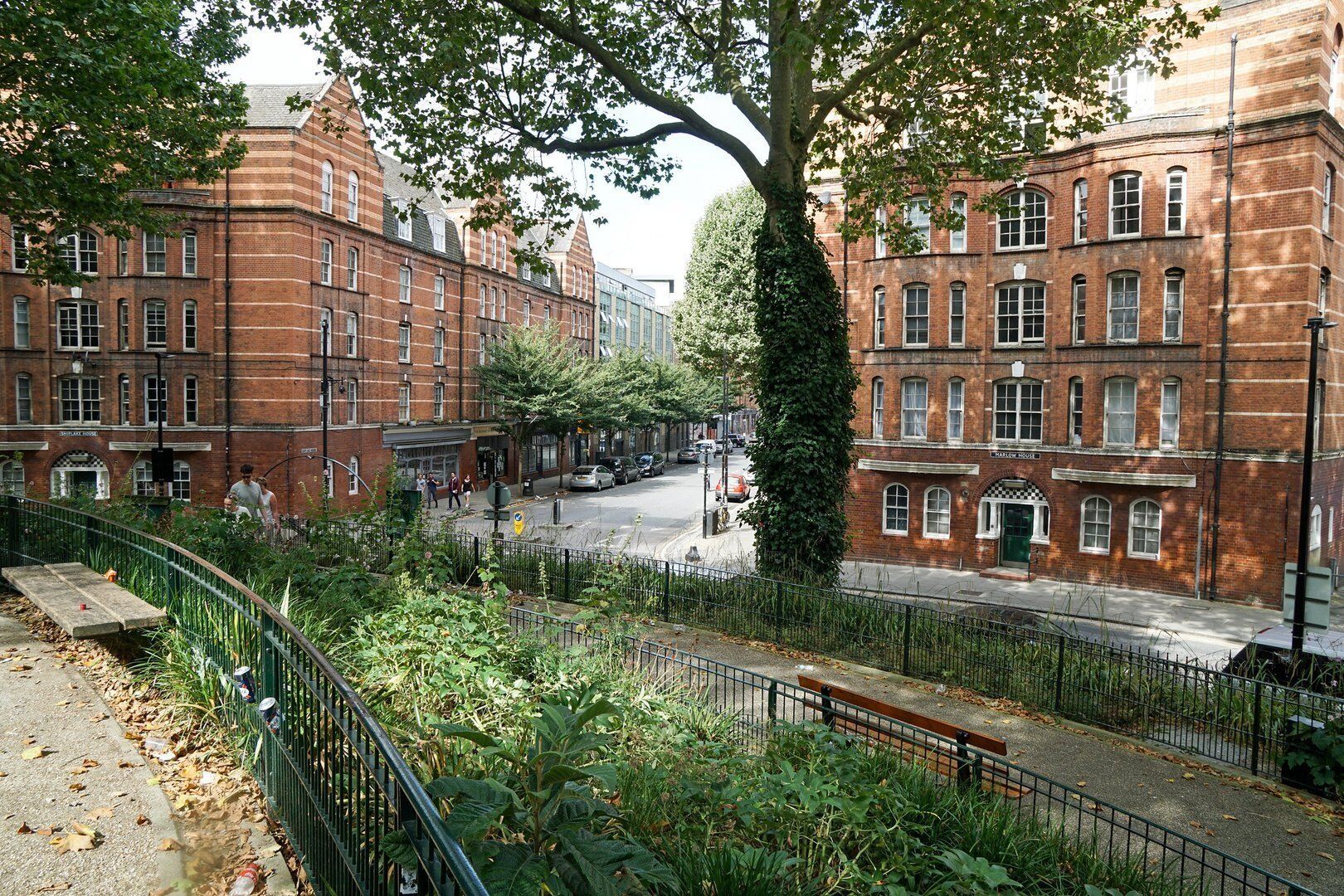
‘Quiet’ isn’t exactly the first word that pops to mind when you think of the nation's ever-changing capital. From the perma-tanned carnage of Liverpool Street to tanked-up Australians prowling Clapham Common, noise is a constant, all-encompassing reality of living within the M25. It’s the exception, though, that proves the rule.
Walking up Shoreditch High Street, you’d be hard pressed to describe your surroundings as peaceful. A polluted tributary of Boxpark, the congested spine of Shoreditch seems to attract all the elements of London that make you want to return to the home counties: garish bars, Westfield-approved burger spots, a thousand Blank Street Coffee outlets. Yet, take a sharp right before the imposing southern face of St. Leonard’s, and you’ll quickly find yourself in a very different sphere of London. Arnold Circus is not a hidden gem (nothing is) – a combination of crossbows and Margot Henderson & Melanie Arnold has seen to that – but it is quiet. And in a city that can literally cause hearing damage, that’s worth a visit.
The Circus itself is the central ornamental space at the centre of a wider housing complex, The Boundary Estate. Looking at the slow development of this now tranquil London oddity provides a neat cross-section of London’s last 300 years or so. Originally the North East border of the fabulously wealthy Hollywell Nunnery, the estate would have been a meeting point for Hackney’s substantial weaver population (you can see a 17th century example of the Weaver dwellings on 2-5 Club Row, at the intersection of the Boundary Estate and Bethnal Green Road). This glorious pastoral image crumbles under the march of the nineteenth century. As the East End became a dumping ground for Britain’s working poor, the area around Arnold Circus moved with the times. Old Nichol rookery was born, a labyrinthine collection of dank cellars, rain-soaked garrets and desperately poor tenants.
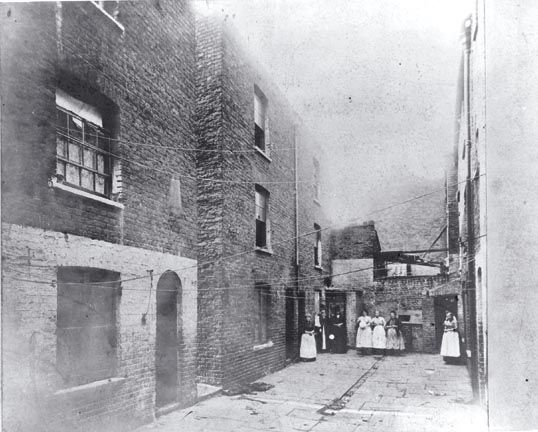
Boundary Street, circa 19th century.
The rookery soon became the par excellence of London slummery. Nearly six thousand residents lived jowl to jowl. The death rate was four times that of the rest of London (which, little surprise, was no health spa in the nineteenth century). Frederick Engels was so struck with the misery of the place that he considered it to be worse than the blackened sprawl of North England’s industrial centres. By 1850, it was accepted as the worst rookery in London. Under Charles Booth’s poverty map, Old Nichols was inked a dark blue, meaning “very poor, casual, chronic want”. The one thing the old Nichol Slum possessed was consensus.
It’s no surprise, then, that one of the first projects of the newly formed London County Council was to clear the slum, ripping the buildings to their foundations. In their place rose the Boundary Estate, completed in 1900 and widely celebrated as the first example of social housing in Britain. Built in a semi-circular formation around Arnold Circus, the new estate was not just a physical intervention but a social experiment – an early attempt at using architecture to foster dignity and civic pride among the working class. In a neat aspect of historical symbolism, the collapsed debris of the old rookery allegedly forms the mound at the centre. If you kick up enough turf, you’re likely to come across the odd Victorian bearing, nut or bolt. London often offers up metaphors that read too neatly.
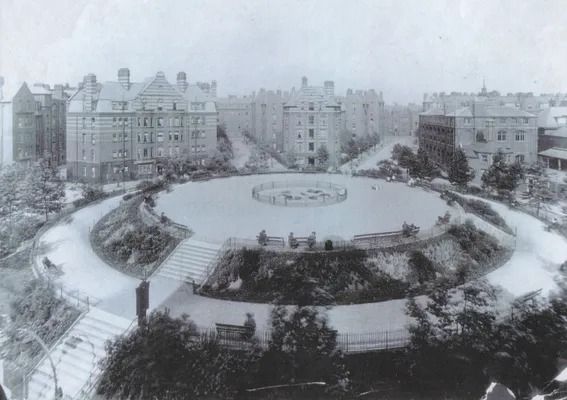
The newly built Boundary Estate around Arnold Circus sans the bandstand, circa 1900.
With its handsome red-brick blocks, tree-lined streets, and the bandstand at its centre, the Boundary Estate stood in stark, almost utopian contrast to what had come before. “London’s first council estate”, as it is often called, dodges many of the aesthetic critiques of later social housing projects. Lacking the brute concrete exteriors, skyward walkways or open plazas of post-war developments, the Boundary Estate plays to the tastes of a country yearning for the nostalgia of pre-war Empire. The sensibility of the place leans towards the Arts and Crafts movement – patterned brickwork, Dutch gables, the central bandstand. All put you in the mind of Venice, transliterated through 1890s London. It’s an easy look to sell – with Foxton’s declaring the area’s ‘Arts & Crafts style’ to be ‘highly sought after among buyers and tenants’.
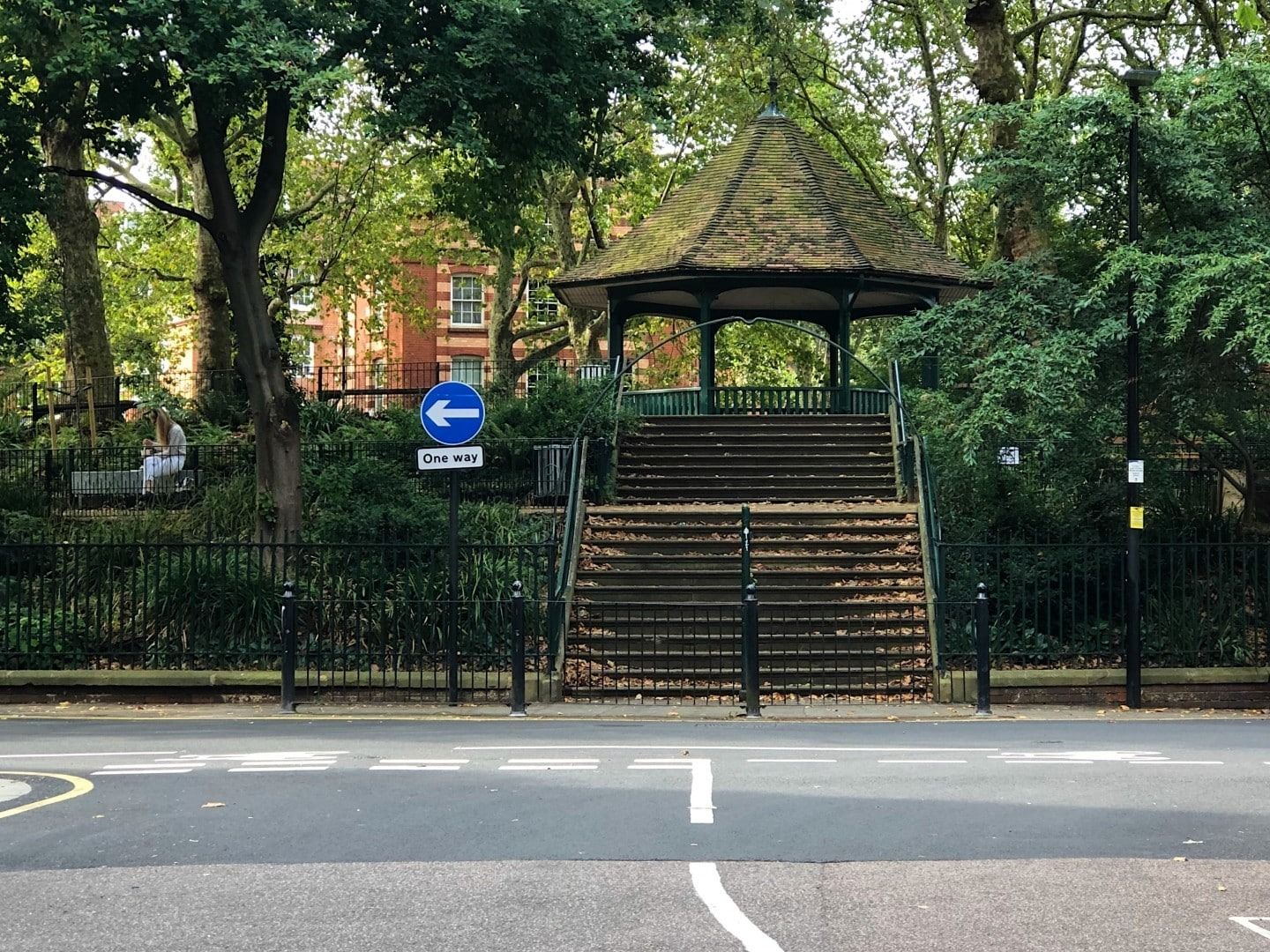
The Arnold Circus bandstand today.
Walking around the estate today, it’s easy to let the aesthetic history bury the social. This is not coincidental – the tide of privatisation has not left the Boundary Estate dry. Since Thatcher’s ‘Right to Buy’, a third of the estate has transferred into private hands. The remaining public housing is split between Hackney and Tower Hamlets councils, reflecting the borderlands location of the estate. The issue came into crystalline clarity in 2024. The Boundary Estate Laundrette, a community feature since 1992, was given notice of closure. This was despite the lack of sufficient laundry facilities provided by the council in the flats themselves. Meanwhile, across the road from the laundrette, boutique fashion stores and expensive delis proliferated (presumably paying Shoreditch-level rents and council rates). The residents protested, highlighting the laundrette as a space for both community and functionality. Thankfully, the laundrette reopened and remains open as of the date of this article's publication, thanks to the council's assistance.
Britain, famously, is a nation of shopkeepers and brick lovers, overseen by a class who have attacked public services and sought cheap imported labour. Arnold Circus, with its distinctive look, high-end grocers and subsidised launderette, embodies all of this quietly. Let’s hope the distinctive balance holds.
Editor’s note: Spot any incorrect information? Or have an article idea for HeadBox.com? Get in touch at submissions@headbox.com

Stop searching and let the perfect venue find you!
Tell us what you're looking for
We'll share your enquiry with suitable venues
Get messages from venues & match with your favourites