Event case studies
Feb 5, 2026

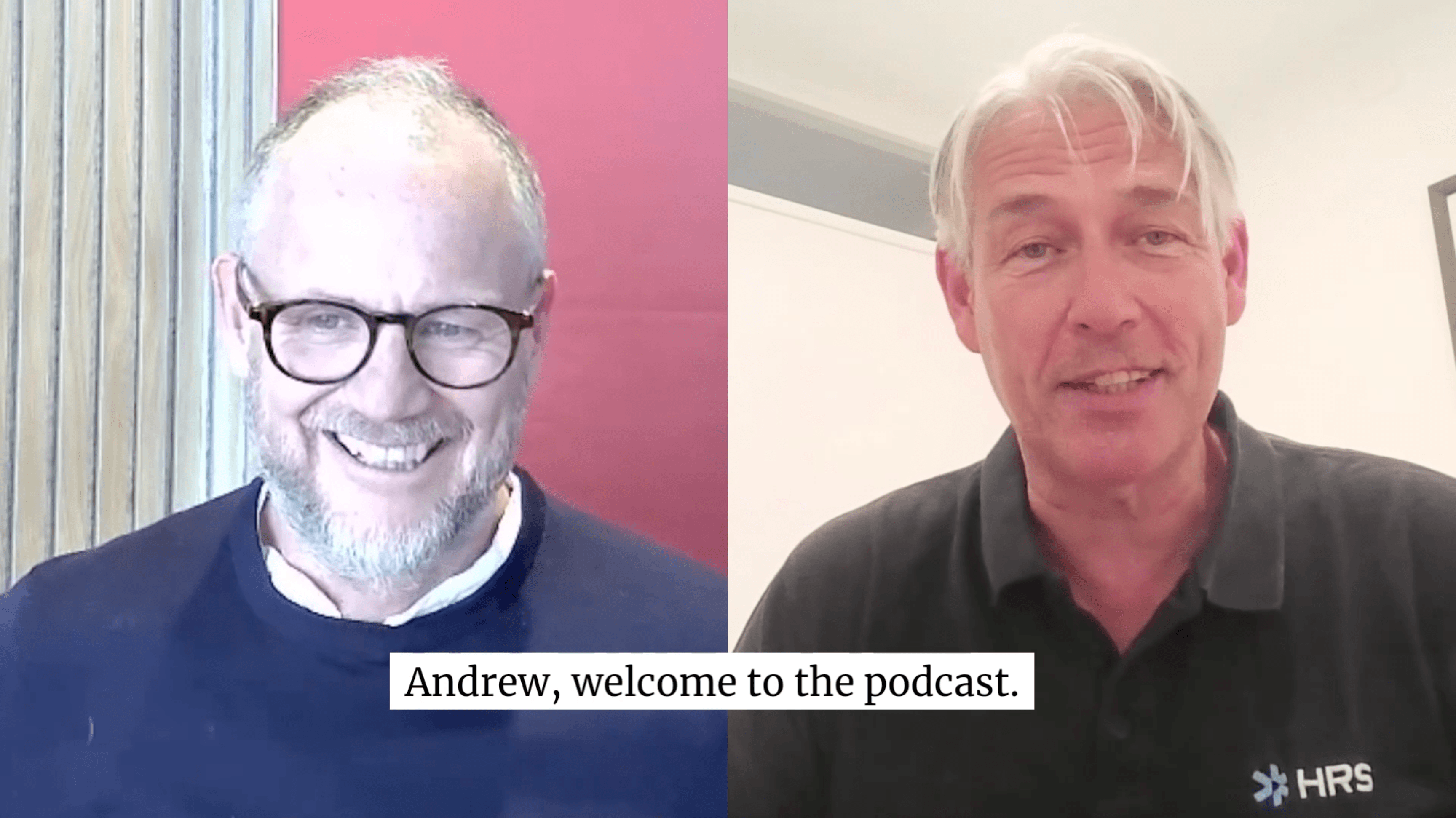

Andrew opened by framing a shift that many in the industry are still catching up to: 91% of travel managers have now been given responsibility for meetings and events — an entire new category of spend, often without additional headcount, specialist technology, or reliable data to support them.
The reason this is happening, he argued, is that travel itself has fundamentally changed. It's no longer about cost containment where the traveller is treated as a data point. Travel is now about outcomes, experiences, and the value created for the individual and the organisation. That elevation in purpose has pulled meetings and events up with it — making both categories strategically important in a way they weren't before.
The challenge is that the current approach to meetings and events was built for a different era:
"AI is going to elevate the human role — it's not going to diminish it. It will give us data that finally works for us. And it's going to make creative, memorable experiences the standard, not the exception."— Andrew Needham, CEO & Founder, HeadBox
Jason Long raised a tension that will be familiar to anyone in procurement: data is the foundation of AI, yet meetings and events data is notoriously unmanaged. "Some corporates are running blind," he said. Andrew agreed without hesitation.
The core problem is shadow spend. Bookers, PAs, and EAs are managing events individually — building direct relationships with venues, negotiating offline, using a patchwork of different tools. None of this is visible to the organisation. The result is leakage, waste, overspend, and undetected risk.
Andrew identified two priorities for fixing this. First, data hygiene and a single source of truth: standardising data definitions at source, enforcing consistency across systems, and governing how data is distributed. The "garbage in, garbage out" principle is just as true in the AI era as it ever was — flawed data fed into an AI model doesn't produce flawed outputs quietly, it produces flawed insights delivered with false confidence.
Second, and more strategically: leveraging proprietary domain data. The large language model itself — GPT, Claude, Gemini — is not the differentiator. It's a utility, like electricity. Every competitor has access to the same power source. What cannot be replicated is the proprietary data you bring to it. When you combine closed domain expertise with open-source LLM capability, you create an intelligence layer that is genuinely hard to copy — and a flywheel that widens the competitive moat with every transaction.
"The model is not the differentiator. GPT, Claude, Gemini — these are utilities, like electricity. Every competitor has access to the same power source. What cannot be replicated is the data you plug into it. That's how you create your data moat."— Andrew Needham, CEO & Founder, HeadBox
Venue sourcing was Andrew's first example of AI meaningfully improving the user experience. Customers consistently ask for access to creative, inspiring, iconic venues — not the same hotel conference rooms they've always used. They want choice across their entire meetings programme, from boardroom meetings to summer parties. They want personalisation. They want richer content to help planners make better decisions.
AI agents conducting deep research across vast knowledge bases — combining proprietary venue data with open-source information — can now surface the right venue in any city in the world in seconds. What used to take hours of manual research becomes near-instantaneous, with better results.
Contracting was his second example, and it speaks directly to the back office bottleneck that Jason raised. Venue contracts arrive in inconsistent formats — PDFs with varying structures and terminology. Reading, interpreting, and re-entering information from those contracts is slow, error-prone, and manual. AI can now take 90% of the time out of that process, feeding directly into invoicing, where it can cross-reference what was contracted, what was reserved, and what actually appeared on the final invoice — flagging discrepancies before they become disputes.
As Jason noted from HRS's experience, this kind of automation also unlocks level three data: granular transactional detail within invoices that can be used to optimise future meetings programmes. The operational burden lifts, and the intelligence compounds.
"When the operational and administrative burden is lifted, the energy goes where it belongs — into designing events that people remember."— Andrew Needham, CEO & Founder, HeadBox
Andrew's advice for teams newly responsible for meetings and events was direct. First, embrace it — EAs, PAs, and event planners often worry AI will replace their roles, but the more useful framing is that human gatherings are becoming more valuable, not less. In a world saturated with synthetic interaction, the premium on real, face-to-face, witnessed shared experience is rising. That's the work these teams do. AI handles the speed and scale; humans provide the creative instinct, the relationship intelligence, and the ability to design experiences that move people.
Second, be AI-smart rather than just AI-first. Identify the repetitive, admin-heavy tasks — the parts of the job that are a burden rather than a contribution — and use AI to streamline those. Then refocus on the strategic and creative elements: curation, relationships, judgement, experience design.
Third, get demos. Go directly to suppliers. There are companies doing genuinely interesting things with assistive AI and agentic AI in this space. Seeing it work in a live demo is worth more than any amount of reading about it.
"AI won't replace humans — but humans who use AI will replace those who don't. The role shifts from administrator to architect."— Andrew Needham, CEO & Founder, HeadBox
Andrew closed with two areas of genuine concern. The first was trust and authenticity. As AI becomes ubiquitous, trust becomes the scarcest commodity. Brands are already experiencing what researchers call "authenticity fatigue" — audiences rejecting content that feels too smooth, too perfect, too devoid of human soul. By 2027, some analysts predict 20% of brands will actively market the fact that their work is made by humans, the way food brands market organic provenance.
The cautionary tale Andrew cited was Klarna, which replaced 700 customer service agents with AI, projected $40 million in savings, and was widely celebrated for it. Within 18 months they were quietly rehiring, because customer satisfaction had deteriorated on complex interactions. The CEO's own admission: cost had been too dominant an evaluation factor. The lesson for meetings and events is clear — the sector's core purpose is human connection, and optimising purely for cost efficiency at the expense of experience is a category error.
The second watchout was security. 38% of employees are already sharing sensitive company data with AI tools without their employer's knowledge — pasting client information, meeting notes, and budget details into consumer AI platforms invisible to IT. Over 80% of phishing emails now involve AI assistance. Newly discovered vulnerabilities are being exploited faster than ever.
"The companies that benefit most won't be the ones that automate everything — but the ones that are deliberate about where AI is trusted to act, where guardrails sit, and where human judgement still matters. Speed without domain knowledge is just faster mistakes."— Andrew Needham, CEO & Founder, HeadBox
Andrew Needham is CEO and Founder of HeadBox, the global events partner for the AI era. HeadBox centralises meetings and events programmes — venue finding, supplier sourcing, accommodation, event management, booking, budget visibility, and carbon reporting — in one platform. Listen to the full episode on the GBTA Business of Travel podcast.